
Also from Versnq
We built AMS. We can build yours.
Web applications, backend systems, workflow automation, MCP servers and integrations — for companies whose operation needs something that does not exist yet. AMS is one we built, host and support ourselves, which is the shortest way to show what that means.
The work
What we build
Web applications
The whole thing, front to back — the screens people use and the system underneath them. AMS is one of these, built and running in production, which is the shortest way to show what that means.
Backends & APIs
The part nobody sees and everything depends on. Data modelled so it stays correct, permissions checked on the server every time, and an API another system can actually be built against.
Workflow automation
The jobs somebody does by hand every week because no two systems talk: a form that should create a record, a report that should arrive on a Monday, an alert nobody remembers to send. Built on self-hosted n8n where that fits, so the automation belongs to you rather than being rented.
MCP servers
A Model Context Protocol server lets an AI assistant operate your systems directly — pull a report, look up a record, file a request — instead of a person copying between a chat window and six tabs.
Integrations
Two systems that each hold half the truth, made to agree. Imports, exports, scheduled syncs, and the error handling that decides whether anyone ends up trusting the result.
Reporting that reconciles
Most reporting trouble is not charting. It is agreeing what a number means and then computing it the same way every time, so two people reading the same report reach the same conclusion.
Proof
Something we built, and still run
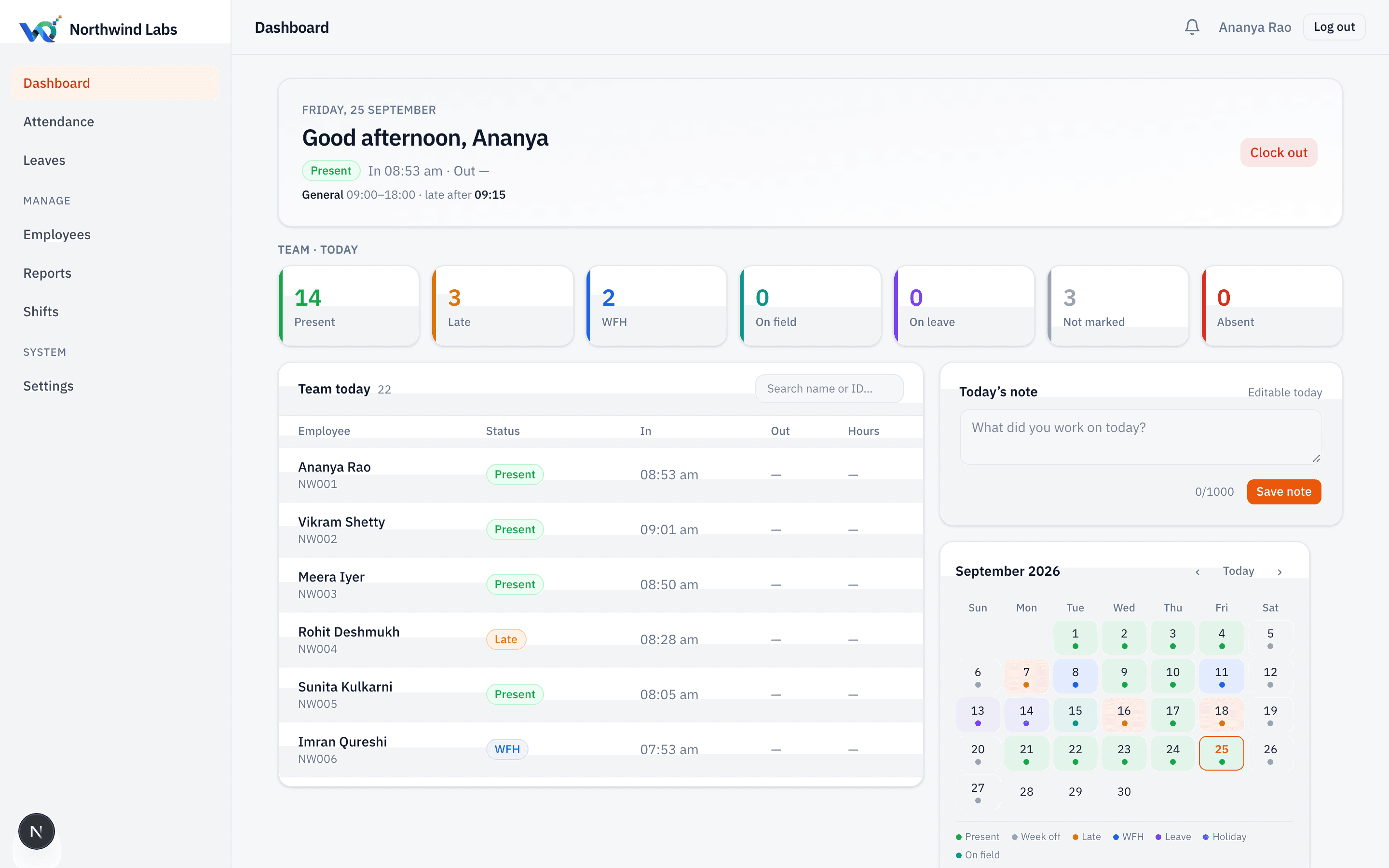
AMS is not a portfolio piece. It is a live product with a paying client, its own infrastructure, its own backups and its own support line — and every screenshot on this site is the real thing.
Anyone can show you a project they shipped and walked away from. Running one is the harder half, and it is the half that tells you whether your system will still work in a year.
How it goes
Four steps, in this order
Nothing unusual in the list. Following it properly turns out to be the unusual part.
The work comes before the software
The first conversation is about how the job is done today, including the parts done in a notebook and the parts done by one person who remembers. Software that does not match the work gets abandoned, however good it looks.
Scope is written down, exclusions included
In plain language, with the deliberate exclusions as prominent as the inclusions. If something is out, you know before it starts rather than when you ask for it.
It is built in complete pieces
One module finished and in your hands beats five at eighty per cent. You use each piece as it lands, which is also how the next piece gets decided.
And then it is run, not handed over
Hosting, backups, monitoring and the phone call when something is wrong. AMS is run this way today, which is the only honest proof that yours can be.
A good fit
Bring us this
- An operation run on spreadsheets that several people now maintain by hand
- Two systems that each hold half the truth and disagree about the other half
- A report that takes two days a month to assemble and is argued about anyway
- Approvals happening over WhatsApp with no record of who agreed to what
- Software you bought that fits eighty per cent of how you work and fights the rest
- Internal tools you want an AI assistant to be able to operate directly
Not our work
We will point you elsewhere
- Mobile apps — we build for the web, and say so rather than learning on your budget
- Anything whose value is its audience: social apps, marketplaces, games
- A rewrite for its own sake, where the current system works and is merely unfashionable
- A fixed-price bid on a specification nobody has read carefully
Questions
Before you enquire
What does “web application” mean here — just a website?
No. A website is pages someone reads; a web application is software someone works in. AMS is the example: logins, roles, permissions, a database, reports, exports, background jobs. If what you need is a marketing website, we are not the right people and will say so.
What is an MCP server, in plain terms?
Model Context Protocol is a standard way to let an AI assistant use your systems directly — pull a report, look up a record, file a request — instead of a person copying between a chat window and six browser tabs. An MCP server is the piece that exposes your system safely, with the same permission checks a human would face.
Have you built MCP servers before?
Not for a client, and we will not pretend otherwise. What we did do is build AMS so that an MCP layer can wrap it without rewriting anything — every operation lives in a callable service rather than inside an endpoint, which is exactly the shape this needs. We would rather show you that decision than claim a project we have not done.
Do you take on small projects?
Yes, if the problem is real and well-bounded. A two-week integration that removes a recurring manual job is a good project. A three-month build with no clear owner on your side is not, whatever the budget.
Who owns the code?
You do, for work built for you — written into the agreement rather than implied. AMS itself stays ours; anything built on top of it for your company is yours.
Fixed price or time and materials?
Fixed price on a scope both sides have read and understood, which covers most work. Where the shape genuinely is not knowable up front, we say so and do paid, bounded discovery first rather than pricing a guess and arguing about it later.
What do you build with?
Python and FastAPI on the server, PostgreSQL for data, Next.js and TypeScript on the front end, Docker in production. Deliberately boring tools, chosen because somebody has to maintain this in five years.
Start here
Tell us what is breaking
A call, a description of the problem, and honest questions. If this is not the right fit you will be told so — that costs one conversation and saves you a project.